
What Banks Really See in Your Messy Books

A bank does not see “busy season” when your books are a wreck. It sees risk.
That may sound harsh, but it is how lending works. A lender is not only deciding whether a business makes money. It is deciding whether the numbers are clear enough to trust.
From the loan officer’s side, messy books change the whole feel of a loan file. Even when the business is solid, disorganized financials make the deal harder to approve, harder to explain, and easier to decline.
This is informational only, not financial advice. But if a loan, line of credit, or equipment financing is on the horizon, clean books can matter as much as a strong sales year.

Messy books make lenders slow down
Loan officers move fast when the story is clear.
They want to understand three things quickly:
Does the business make enough money?
Can it repay the debt?
Are the numbers reliable?
Messy books slow that down.
If income jumps around with no explanation, expenses are miscategorized, bank statements do not match the profit and loss, or owner draws are buried in strange places, the lender has to stop and ask questions.
That delay matters. A messy file does not always die right away. Sometimes it just gets pushed aside because cleaner files are easier to approve.
A lender may like the business. They may like the owner. They may even believe the loan makes sense. But they still need to defend the decision to underwriting, credit, and sometimes a loan committee.
Clean books give them something to stand on. Messy books make them say, “I need more.”
They are looking for consistency, not perfection
A lot of business owners think banks expect perfect books. They do not.
Most lenders understand that small businesses are not giant companies with full accounting departments. They know owners run lean. They know cash flow can be seasonal. They know one bad month does not mean the business is failing.
What worries a bank is inconsistency that cannot be explained.
For example, these are not instant deal breakers:
Sales dip during a slow season
Payroll rises after hiring
Inventory increases before a busy period
Profit falls after buying equipment
Owner draws change from month to month
Those can all make sense.
The problem starts when the books do not explain what happened. If sales fell because a large customer paid late, say that. If expenses rose because a machine broke, show it. If profit dropped because you stocked up for a big contract, document it.
A lender can work with a reasonable explanation. They cannot work with fog.
Banks do not need your business to look flawless. They need the numbers to match the story.
Sloppy categories raise quiet doubts
One of the fastest ways to lose lender confidence is sloppy categorization.
This sounds small, but it is not.
If meals, travel, software, inventory, fuel, subcontractors, and owner expenses all sit in vague buckets, the lender cannot tell what the business really costs to run.
That affects cash flow analysis.
A loan officer may ask:
Which expenses are required to produce revenue?
Which expenses are one-time?
Which expenses are personal?
Which expenses could be reduced if cash got tight?
What does the business actually earn before owner benefits?
When categories are sloppy, the safest answer is often the most conservative one. That can reduce the amount the bank believes the business can borrow.
Here is the part owners often miss. Messy categories do not just make the books harder to read. They make the business look less managed.
A bank may wonder if the owner knows their margins. It may wonder if tax returns include the full picture. It may wonder if the business has enough control to handle more debt.
That may not feel fair, especially if the owner is excellent at sales, operations, or customer service. But lenders judge the file they have, not the business they imagine.

Bank statements tell the truth faster than reports
A profit and loss statement is useful. A balance sheet is useful. Tax returns are useful.
But bank statements often tell the lender what is really happening.
When I reviewed loan files, bank statements could confirm or challenge the story fast. If the books showed strong revenue but deposits were thin, that raised questions. If the books showed profit but the account was constantly overdrawn, that raised questions too.
Banks look for patterns such as:
Regular deposits that support reported revenue
Enough cash left after bills are paid
Overdrafts or returned payments
Transfers between accounts
Large unexplained withdrawals
Personal spending mixed into business activity
Loan payments or cash advances not listed clearly
A messy bank account does not always mean a weak business. Some profitable businesses run close to the line because owners move money often, pay vendors fast, or manage several accounts.
But if the movement is hard to follow, the lender may treat it as risk.
This is why it helps to keep business and personal activity separate. Mixed accounts force the lender to untangle the story. That creates more work, more questions, and more room for doubt.
Cash flow matters more than revenue
Revenue gets attention. Cash flow gets loans approved.
A business can bring in a lot of sales and still struggle to repay debt. Maybe customers pay late. Maybe inventory eats up cash. Maybe payroll hits before invoices clear. Maybe the owner takes large draws during strong months and leaves little cushion.
Banks care about repayment from normal operations.
They want to see that the business can cover its regular bills, pay existing debt, support the owner, and still handle the new loan payment.
Messy books make that hard to measure. If the lender cannot separate true operating expenses from one-time costs, personal expenses, or accounting errors, they may assume less cash is available.
That can lead to a smaller approval, a request for more collateral, a higher need for guarantor strength, or a decline.
This is where clean books can change the conversation. If you can show that one unusual expense hit last quarter, or that a large deposit arrived after the statement date, the lender may adjust the analysis.
Without clean records, those details sound like excuses. With clean records, they become evidence.
Mess does not always mean no
Here is the good news. Messy books do not automatically kill a loan request.
A lender may still approve the deal if the business has strong deposits, solid credit, good collateral, low debt, or a long relationship with the bank. Some banks also work with businesses that are growing faster than their bookkeeping has kept up.
But mess changes the tone.
A clean file says, “This owner has a handle on the business.”
A messy file says, “We need to verify everything.”
That second file may still get approved, but it often takes more effort. The bank may ask for extra documents, updated financials, accounts receivable aging, debt schedules, tax transcripts, vendor information, payroll records, or written explanations.
The owner may feel like the bank is being difficult. In reality, the lender is trying to reduce uncertainty.
Uncertainty is expensive in lending. If the bank cannot prove the strength of the business on paper, it has to protect itself another way.
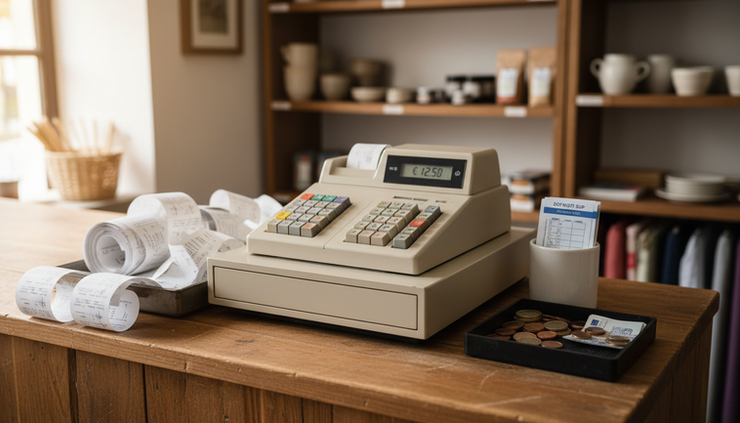
What clean books signal to a bank
Clean books signal more than accounting skill.
They tell the lender the owner pays attention. They show that money coming in and going out has a system. They make the business easier to understand, and easier to trust.
Good financial records can signal:
The owner knows the numbers
Revenue is trackable
Expenses are controlled
Debt payments are visible
Tax filings are likely to match reports
Cash flow can be measured
The business is prepared for growth
None of that guarantees approval. Banks still look at credit, collateral, industry, time in business, repayment ability, and the purpose of the loan.
But clean books remove avoidable friction.
They help the lender say yes with fewer doubts.
What to fix before you apply
If a loan might be coming in the next few months, do not wait until the application to clean up the books.
Start with the basics.
Reconcile every account
Make sure the bank balance in your accounting file matches the actual bank statement. Do this for checking, savings, credit cards, and loans.
If the numbers do not match, a lender will notice.
Separate business and personal spending
Personal expenses inside business books create confusion. If they exist, categorize them clearly and stop adding new ones.
A lender does not want to guess whether a payment was for inventory or groceries.
Clean up vague expense buckets
Too much money sitting in “miscellaneous,” “other,” or “uncategorized” makes the file look careless.
Break those expenses into clear groups.
Match reports to tax returns
Your profit and loss statement should not tell a completely different story from your tax return without a clear reason.
Differences happen, but unexplained differences create doubt.
Prepare plain explanations
If something unusual happened, write it down before the lender asks.
Examples include:
A large one-time repair
A major customer paying late
A temporary shutdown
A big inventory purchase
A new contract that changed staffing
A personal contribution to the business
Short explanations help. Long, defensive ones do not.
The lender is reading the owner too
This part is uncomfortable, but true.
Banks read behavior.
If an owner cannot explain sales, margins, debt, or cash flow, the lender notices. If the owner blames the bookkeeper for every issue but never reviews reports, the lender notices. If documents arrive late, incomplete, and inconsistent, the lender notices that too.
The numbers matter. So does the way the owner handles questions.
A calm, clear answer builds confidence. A messy explanation makes the file feel risky, even if the actual business is healthy.
This does not mean the owner has to sound like an accountant. It means they should understand the basics:
What drives revenue
What the biggest expenses are
Which months are strongest
Which customers or jobs matter most
How much debt the business already carries
How the new loan will be repaid
Good answers make the financials feel real.
The real message behind messy books
When a bank sees messy books, it rarely thinks one simple thing.
It may see a busy owner. It may see growth. It may see a business that outgrew its systems. It may see tax-time cleanup instead of monthly management.
But it also sees risk.
Risk that revenue is overstated. Risk that expenses are understated. Risk that cash flow is weaker than it looks. Risk that the owner does not have a clear view of the business.
That is why What Banks Really See in Your Messy Books comes down to trust.
The bank is not only asking, “Did this business make money?”
It is asking, “Can we trust these numbers enough to lend against them?”



Comments